
Identify the clothes dryer before choosing its care
When requesting clothes dryer service, report the known type and observed change. Appearance alone may not identify the design. Use available model information or the user manual, and ask the technician if uncertain. RMAN assesses the appliance, explains the fault and proposed work, and provides a firm quote after inspection before repair is agreed.
Do not pull out the dryer or open parts to find an inaccessible label. Care advice from a similar-looking appliance may not apply to yours, including within the same broad dryer category.
Vented dryers: ask about the air path
For a vented dryer, understand how air is meant to leave the appliance according to its installation and manual. This does not require owner access to concealed parts. With the appliance off and safely disconnected, report only exterior obstructions that can be seen without moving it.
An unfamiliar air route is a point to discuss, not something to dismantle. Mention changes around the appliance without declaring them the cause. Applicable care and access depend on the model and actual installation.
Condenser dryers: water arrangements differ
A condenser dryer may have a water container, with handling and arrangements that vary by model. Identify owner-care parts through the manual rather than guessing from a drawer or handle. Follow permitted care only with the appliance off and safely disconnected.
Condenser access also varies. Instructions for another model do not justify removing a part from yours. If the procedure is unclear, leave it in place. Water near electrical equipment ends owner checks: stop use and call a technician instead of tracing it by touch or running another cycle.
Heat pump dryers: similar results, different care limits
A heat pump dryer differs from a vented design, but the technology name alone does not define owner access. Consult the model’s instructions for lint filters and other permitted care. Do not assume that every component described as a condenser is removable.
If instructions or illustrations do not match the appliance, stop rather than forcing an unfamiliar cover. Ask about model-specific care. Generic technology descriptions are not permission to apply cleaning materials, change parts or repeat operation to search for a suspected fault.
Lint care with clear owner boundaries
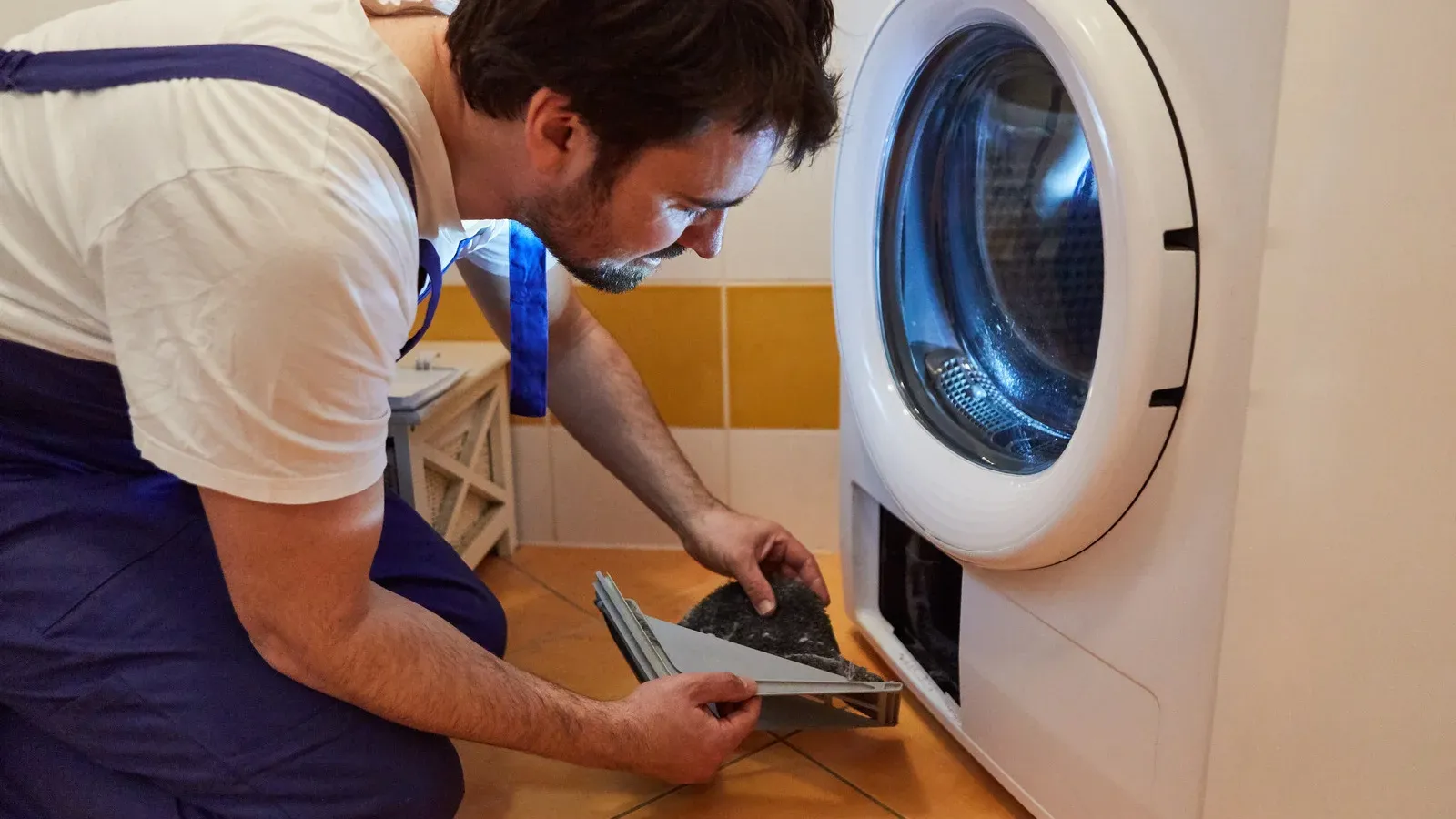
Lint removal may be part of owner care when the manual identifies an accessible filter. Perform only that permitted care with the appliance off, safely disconnected and cool. Do not reach behind the filter, use an object to access concealed areas or operate with the filter removed.
Seeing lint on an accessible filter is an observation, not proof that the entire air route is obstructed. The appliance care guide offers broader context, but dryer care still depends on its own instructions rather than a universal schedule.
A practical comparison list
Vented dryer: understand the intended air route and ask what can be observed externally without altering installation.
Condenser dryer: identify water collection and permitted care for that model, without assuming every similar drawer has the same purpose.
Heat pump dryer: establish precisely which owner-accessible parts the manual describes; a technology label is not a universal procedure.
Washer-dryer combination: distinguish the washing and drying functions. For a separate washing or spinning problem, describe it through washing machine service rather than transferring care instructions from a standalone dryer.
When the concern is changed performance
Changed drying performance should be described as an observation rather than attributed to the dryer category. Report the programme, laundry condition and load differences remembered from earlier use. The prolonged drying guide addresses that narrower question.
Stop use and call a technician for smoke, sparking, a burning smell or unusual heat without touching a suspect surface. The dryer service warning-sign article gives context, not instructions to search for hazards by operation. Distinguish a care question from an actual operating fault when calling.
Prepare the inspection request and aftercare question
Keep model information, normal use and the observed change together. Explain any permitted care attempted and anything unclear without opening parts to complete the account. Mention restricted access, leaving the dryer and connections in place.
After findings are explained, connect the proposed work to the complaint before approval. Ask which care remains appropriate under the model’s manual and which work belongs to a technician. Retain the explanation with the appliance documents instead of turning it into advice for every dryer or a promise about performance.