Describe the change in hot water
Start with what has changed at the tap. The water may feel less warm than usual, become cool earlier during normal use, or remain cold whenever hot water is requested. These patterns are useful observations, but they do not identify a failed part by themselves. A change in household use can also affect how the problem appears.
Tell the technician whether the change was sudden or gradual and whether it affects every hot-water outlet. Describe the normal routine rather than trying to recreate the fault. Do not repeatedly operate a controller or backup heater to obtain a different result.
Look for visible collector problems without climbing
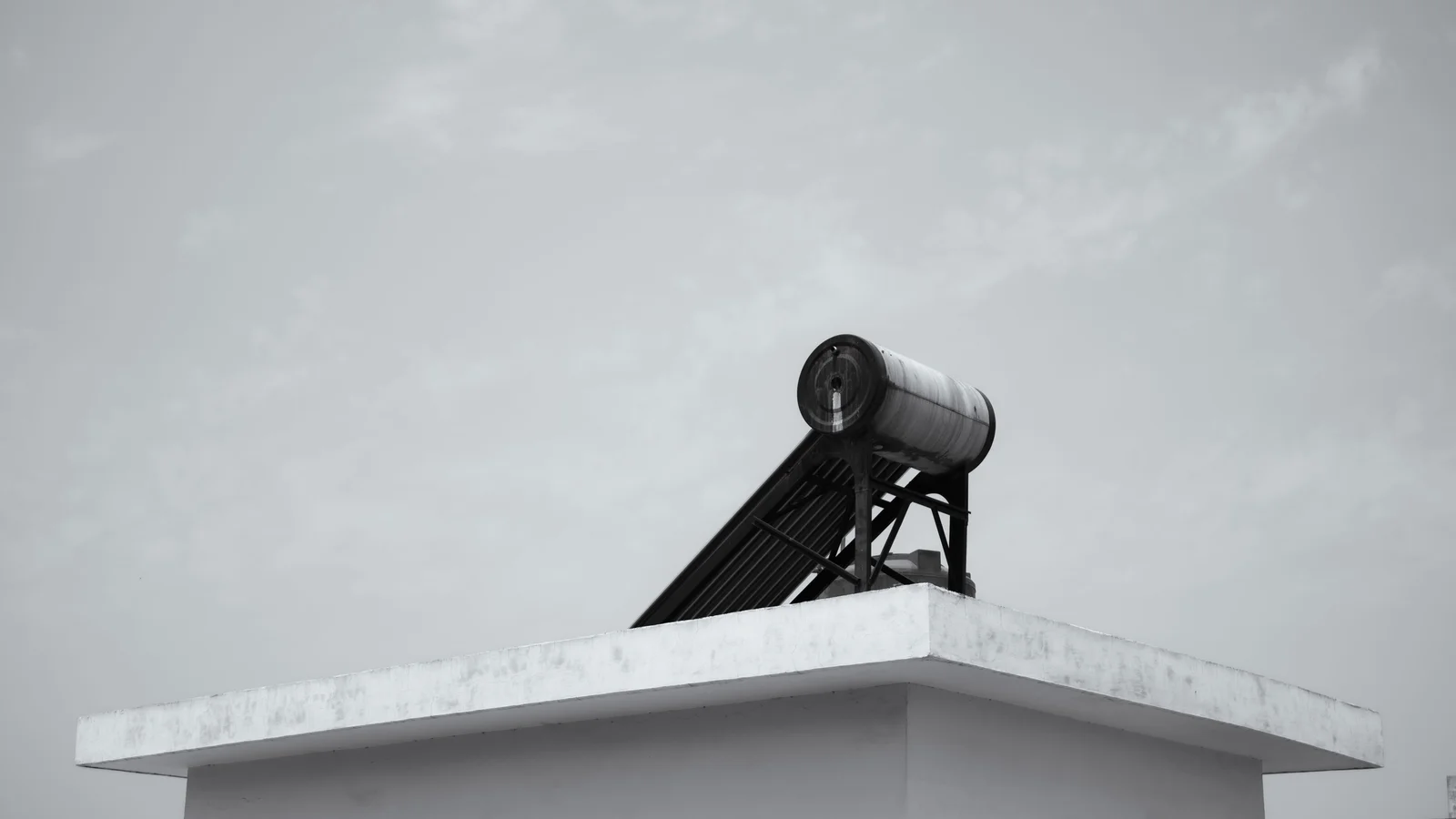
Collector tubes or panels receive sunlight and pass heat into the system. Dirt, visible damage or shading can be relevant when heating becomes weak. From ground level, note whether something now blocks sunlight or whether damage can be seen without approaching the equipment. A distant view cannot establish the condition of every tube.
Do not climb onto a roof in rain, wind or other poor conditions. Do not lean out of a window or use an unstable ladder for a better photograph. Collector cleaning and access arrangements should be discussed with the technician rather than improvised as a household repair.
Read the controller as a clue, not a diagnosis
Some systems have a controller and others do not. If a display is safely visible, record whether it is lit, blank or showing an unfamiliar message. Copy the message in a photograph instead of interpreting it as a definite diagnosis. A sensor or controller problem may affect heating even when the collectors look intact.
Do not open a controller cover, touch wiring or change unfamiliar settings. A blank screen can have different causes, and repeatedly switching the system does not prove which cause is present. If the display cannot be seen safely, tell the technician that rather than attempting rooftop access.
Leaks, circulation and the tank
A damp patch near the tank, water tracking along a pipe or an unfamiliar drip deserves attention even if some hot water remains available. A leak can affect the system, while trapped air or a blocked pipe can interfere with circulation. The visible wet area may be away from the actual source because water follows surrounding surfaces.
Do not drain, refill or open the tank without guidance. Do not loosen fittings to release air. Ask for an inspection of the reported symptoms and the visible leak path. The technician decides whether a connection, collector component, tank or another part needs attention.
Keep observations separate from repair attempts
Safe preparation means observing the normal use pattern, visible shading, accessible display and any damage visible from the ground. It does not include touching electrical parts, opening the tank, handling collector tubes or altering valves whose purpose is unclear. Stop if observing would require entering a wet or otherwise unsafe area.
Use the existing water heater fault overview for broader symptom context. If bad weather is affecting access, the home storm-preparation guide discusses related household concerns. Neither link changes the access and electrical safety limits described here.
Prepare useful information for the visit
Prepare a description of how the water changed, where the symptom is noticed and whether a leak or display change appeared at the same time. Existing photographs can help explain the location, provided they were taken safely. Mention previous repairs if you know about them, but do not remove insulation, covers or protective parts to identify equipment.
Explain any difficulty with safe access when arranging the visit. Keep the approach clear where you can do so without moving the heater or disturbing pipework. Useful information helps the technician understand the request; it does not replace inspection or establish a price in advance.
Repair scope and the quote after inspection
RMAN provides solar water heater repair and parts replacement for existing systems. Its confirmed scope includes common tank and tube types, with repair or replacement of faulty tubes, controllers and tanks as appropriate. RMAN does not install new solar systems. A symptom description should not be treated as an order to replace a particular part.
At the visit, the technician inspects the system, identifies the fault and explains the proposed repair or replacement. A firm quote follows inspection. Ask what the quoted work covers and discuss the recommendation before authorizing the repair.
Choose the service that fits the actual fault
If the concern involves a conventional heater rather than the solar collector system, describe that when requesting water heater repair. If water is reaching a wall or the supply pipe appears involved, home plumbing maintenance may be relevant. These are related services, not evidence that every heating complaint has a plumbing cause.
When booking in Jeddah, state that the request concerns repair of an existing solar heater, explain the symptoms and mention any safety concern. Leave the equipment undisturbed while waiting for advice. The aim is to identify the fault before deciding on the work, not to commit to a new system.