Oven & Cooker

Why Your Oven Heats Unevenly: Diagnostic Causes & Practical Kitchen Solutions

Diagnose why your kitchen gas or electric oven bakes unevenly in Jeddah. Practical troubleshooting for heating elements, temperature sensors, convection fans, and door gaskets.

RMAN Maintenance Guide: Why Your Oven Heats Unevenly: Diagnostic Causes & Practical Kitchen Solutions in Jeddah
Why Your Oven Heats Unevenly: Diagnostic Causes & Practical Kitchen Solutions — RMAN Services, Jeddah
Oven & CookerEng. Sajid Ramzan Technical Team2026-09-08
10 min read
Key Takeaways Summary

An oven bakes or roasts unevenly primarily due to a failing bake or broil heating element, an uncalibrated temperature sensor (RTD probe), a degraded or torn door seal allowing heat escape, a seized convection circulation fan, clogged gas burner ports, or incorrect oven rack positioning. Homeowners can safely inspect heating elements visually for blistering or dark spots, clean perimeter door gaskets with warm water, avoid overcrowding bakeware, and test internal temperature with an independent oven thermometer. Replacing burned heating elements, recalibrating electronic control boards, replacing temperature sensors, servicing convection fan motors, and unblocking gas burner orifices require certified appliance technicians.

01Thermodynamic Balance: How Modern Domestic Ovens Regulate Heat

Achieving perfectly baked pastries, roasted meats, and casseroles depends on maintaining uniform thermal radiation and convective airflow throughout the oven cavity.

In electric ovens, bottom (bake) and top (broil) heating elements cycle on and off in synchronized harmony, guided by a resistance temperature detector (RTD sensor) or capillary thermostat. In convection models, a motorized fan continuously circulates heated air to eliminate stagnant cold pockets.

In gas ovens, a precision burner assembly beneath the floor delivers radiant heat through engineered baffle plates. When any heating element degrades, a sensor drifts out of calibration, or hot air escapes through a worn door seal, internal heat distribution collapses, causing food to burn on one side while remaining undercooked on the other.

02The 6 Primary Causes of Uneven Oven Heating and Baking Results

Burned-Out or Partially Damaged Heating Element: An electric heating element can develop internal open circuits, hot spots, or surface blisters that prevent it from glowing uniformly along its full length.
Temperature Sensor (Probe) Drift: A coated, bent, or aging temperature sensor reports inaccurate resistance readings to the control board, causing premature heat cutoff or continuous overheating.
Worn or Hardened Silicone Door Gasket: A compromised door seal allows continuous thermal leakage at the top or sides of the door, creating cold drafts that disrupt baking consistency.
Defective Convection Fan Motor: If the convection fan motor seizes or fails to spin, heat stratifies into distinct hot and cool layers rather than circulating evenly.
Clogged Gas Burner Ports or Faulty Igniter: Accumulated grease or carbon deposits block gas ports along the burner tube, resulting in an uneven flame profile and localized heating.
Improper Bakeware Placement and Foil Lining: Covering oven bottom racks with aluminum foil restricts engineered thermal convection currents, creating intense hot spots.

03Safe Homeowner Inspection Steps vs. Certified Technical Repair Scope

Homeowners can perform straightforward diagnostic checks to pinpoint the source of temperature inconsistency.

First, inspect the heating elements visually: when set to high, electric bake and broil elements should glow bright cherry-red uniformly without dark gaps or bright blister bubbles. Second, place a standalone dial oven thermometer on the center rack and verify if the temperature reaches within 10 degrees of the digital dial setting after 20 minutes of preheating. Third, inspect the perimeter door gasket for cracks and clean away baked-on food debris.

However, testing element electrical continuity with a multimeter, replacing burned ceramic terminal blocks, recalibrating microprocessor temperature offsets, replacing convection fan bearings, and clearing gas burner jets safely must be left to certified technicians. Working with 220V electric circuits or pressurized gas lines without professional tools introduces severe fire, explosion, and electrical shock hazards.

04Comprehensive Oven Diagnostics and Precision Repairs by RMAN

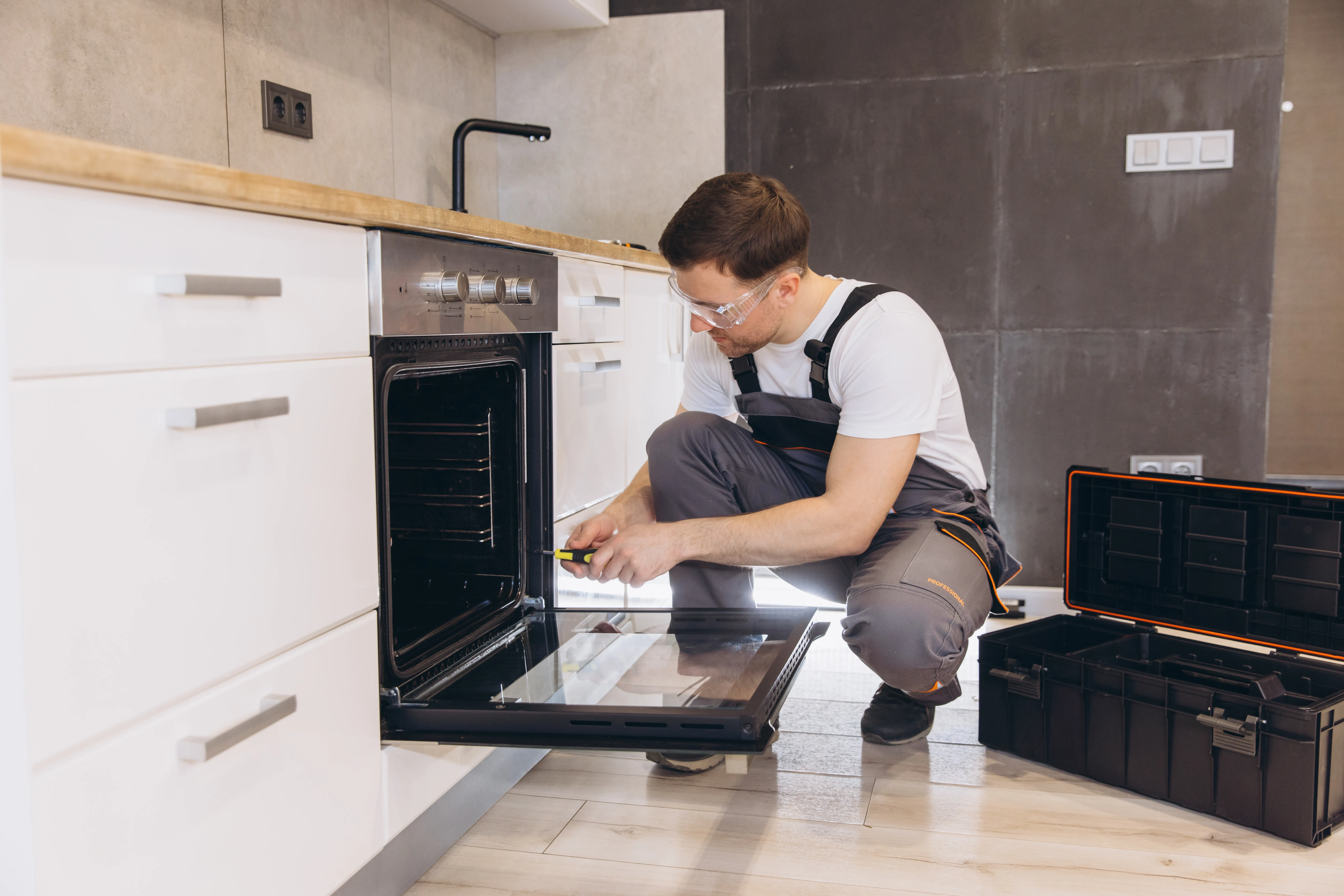
RMAN provides expert diagnostics and on-site repair services for built-in electric ovens, gas ranges, and cooktops throughout Jeddah.

Our certified technicians carry precision digital temperature probes, insulation testers, and genuine OEM replacement heating elements, temperature sensors, safety thermostats, convection fan assemblies, and silicone door gaskets for leading brands including Bosch, Samsung, LG, Whirlpool, Electrolux, and Beko.

Bookings confirmed before 12:00 PM are serviced on the same day across all Jeddah districts, backed by a written parts and labor warranty with 24/7 technical support.

Instructional Video Guide

Video Guide: Related Maintenance Overview

Watch practical maintenance standards and diagnostic procedures from Eng. Sajid Ramzan’s technical team.

Video guide: Oven & cooker maintenance basics
Oven & CookerVideo guide: Oven & cooker maintenance basics

Related Frequently Asked Questions

Direct answers provided by RMAN technical team.

This symptom indicates the bottom (bake) heating element has burned out, leaving the top (broil) element to supply all heat, resulting in localized top scorching.

Specialized Repairs in Jeddah

Need a Certified Technician to Repair Your Appliance?

Explore our certified service guides backed by genuine parts and written warranty:

Need Technical Advice or Booking?

Contact Eng. Sajid Ramzan’s team directly for on-site diagnostic inspection in Jeddah.