Separate signs of operation from actual heating
A light, moving tray and active display show that parts of the appliance are responding, but they do not prove that food is being heated. Describe whether food stays cold, whether heating seems absent throughout normal use, or whether the appliance refuses to start despite an active display. An unfamiliar hum is another symptom to report rather than a diagnosis.
Do not keep repeating a heating attempt to persuade the appliance to work. If the symptom is accompanied by sparks, a burning smell or visible damage, stop. Recording what happened during ordinary use is more helpful than forcing another demonstration.
Understand possible faults without opening the unit
The door latch and its associated switch help the appliance recognize that the door is properly closed. A fault there may prevent starting or heating. Internal power problems, a worn heating component or a control board fault can also leave some visible functions working while heating fails. Damage inside the cooking compartment may introduce a separate safety concern.
These are possible explanations, not instructions to identify parts yourself. The same external symptom can have different causes. Avoid ordering a replacement component from a description alone or assuming that an illuminated display means the electrical parts are safe to touch.
Safe observations at the plug and door
If the plug, socket, hands and surrounding area are dry and undamaged, check whether the plug is seated normally. Note whether other sockets or appliances are also affected, using what is already known rather than experimenting with a damaged outlet. Do not move a built-in unit or reach behind equipment to find its connection.
Look at whether the door closes fully without force. With the unit off, observe the accessible door edge and seal for dirt or damage. Do not push the latch with a tool, hold it in place or use the appliance with a door that needs pressure to remain closed.
Containers, food and ordinary use
Confirm that the container is suitable for microwave use according to its own instructions. A very small food load may make an ordinary observation difficult to interpret, but that is not a reason to run the appliance empty or repeatedly test it. Report what was being heated and whether the container was appropriate when the fault appeared.
Do not place an unfamiliar object inside as a heating experiment. If sparks or an unusual smell appeared, changing the food or container does not establish that the appliance has become safe. Leave it off and describe the event when requesting assessment.
Stop-use signs and the closed casing rule
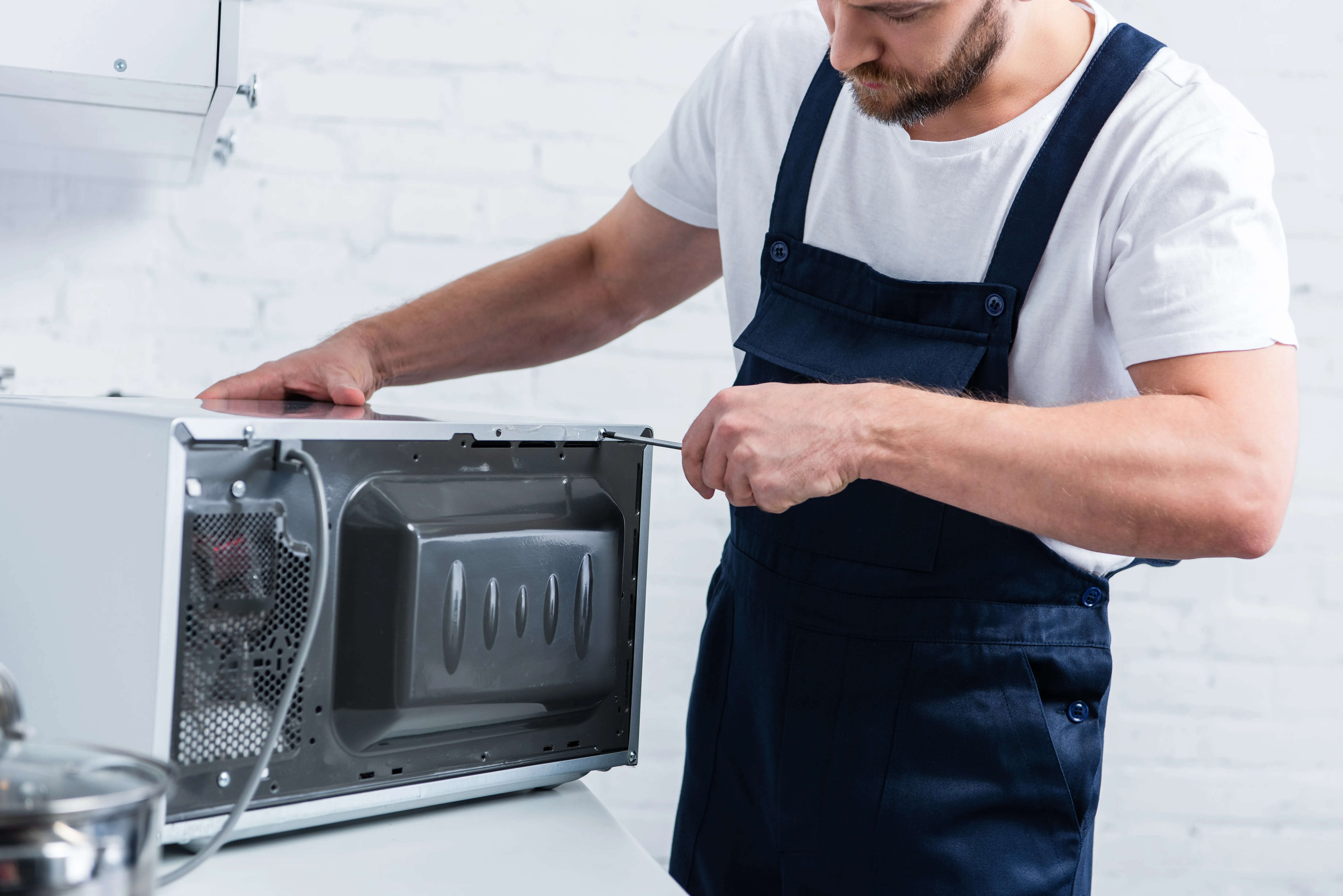
Never open the microwave casing, even when it is unplugged. Some internal parts can retain a dangerous electrical charge after disconnection. Removing a cover is not an external check, and an appliance that appears completely inactive is not safe to explore internally.
Do not use the microwave with sparks, a burning smell, a damaged door or a cracked interior. Do not touch a hot, buzzing or damaged socket. If power cannot be disconnected safely, keep away and seek help. A technician should assess the appliance before further use; absence of a visible spark does not clear a previously damaged door.
Keep repair-or-replace decisions with the inspection
The existing microwave repair-or-replace guide discusses the broader decision. Here, the immediate issue is whether the appliance can be used safely and what should be reported. Do not decide that a microwave is beyond repair merely because the light works without heat, or that repair must be simple because the display is active.
Tell the technician about visible damage, door behavior and the functions that still respond. Ask how the diagnosed fault affects the recommendation. The appliance-care article provides wider context; it does not authorize internal microwave repairs by an owner.
Prepare the appliance information without dismantling
Before booking, write down whether the display, light and tray responded, how the door behaved, and whether any smell, spark or damage was noticed. A photograph of the accessible exterior can help explain the complaint. Do not operate the unit for a recording or remove it from cabinetry to find hidden details.
Keep the appliance off when a stop-use warning has appeared. Tell the booking contact if it is built in or difficult to move. These details help distinguish an appliance complaint from a wider connection concern, without requiring you to diagnose electrical parts or dismantle the kitchen.
Home visit or customer-chosen drop-off
For microwave repair in Jeddah, RMAN offers a home visit or drop-off at the customer's choice. Describe the complaint and discuss the preferred arrangement before moving the appliance. The technician inspects it, identifies the fault and provides a firm quote before the proposed repair.
If a separate cooking appliance is affected, request the relevant oven and cooker repair service. Questions about appliance connections belong with appliance installation. These links help route the request; they are not instructions to change a connection or remove the microwave casing yourself.